




Marennes-Oléron oysters
From flat to hollow
When we think of Marennes Oléron, we of course think of oysters, the famous Marennes Oléron oysters that are served in the finest restaurants. Known since Roman times, Marennes Oléron oysters were first farmed in the mid-19th century, with the creation of the first oyster beds. At that time, the sauniers on the Charente coast were facing stiff competition from the salt marshes of the south of France, and decided to turn to oyster farming. As the salt marshes declined, they were reclaimed by the oyster industry for this new activity, which enjoyed dazzling success. At that time, flat oysters were the mainstay of the basin.
An unexpected event was to benefit the development of oyster farming in the Marennes Oléron basin. In 1868, the Morlaisien, a boat loaded with Portuguese oysters, suffered a navigation accident that forced it to throw its cargo overboard. Although insignificant, this decision had a major impact on the history of oyster farming in Marennes-Oléron. Some of the discarded Portuguese oysters would find a unique ecosystem in France, highly favorable to their growth. Indeed, the mixture of freshwater, mainly from the Seudre, and seawater favors the growth of this mollusc. For many years, flat and creuse oysters coexisted without too much difficulty, even though creuse oysters continued to develop in the Marennes-Oléron basin, despite a local preference for flat oysters. However, from 1922 onwards, an epizootic decimated the flat oyster, forcing oyster farmers to turn to the creuse. Unfortunately, the latter was to suffer from the disease in 1970. The decision was made to bring in Japanese oysters, which were more vigorous and resistant. That's how the business was able to get back on its feet.
A job that requires patience...
Growing oysters is a long and arduous process, since the oyster's journey to your plate is long and complex. The first stage is harvesting. An oyster lays around a million eggs, which, once fertilized, become larvae. In order to capture this"spat", oyster farmers install collectors (tubes, iron bars, interconnected plastic cups, etc.) along the coast. The oysters then attach themselves to these supports. The young oysters then remain on these collectors for 1 to 1.5 years to grow.
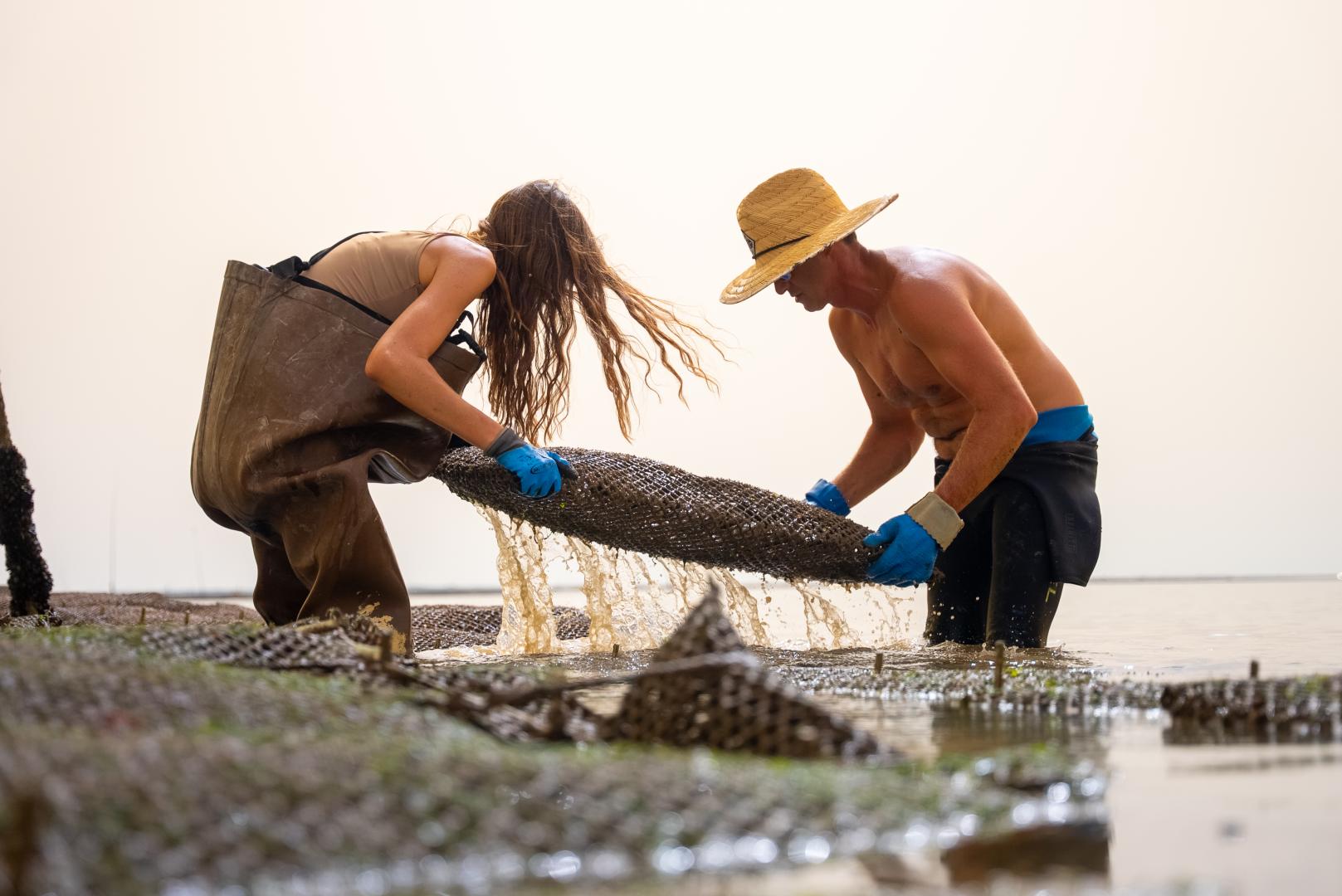
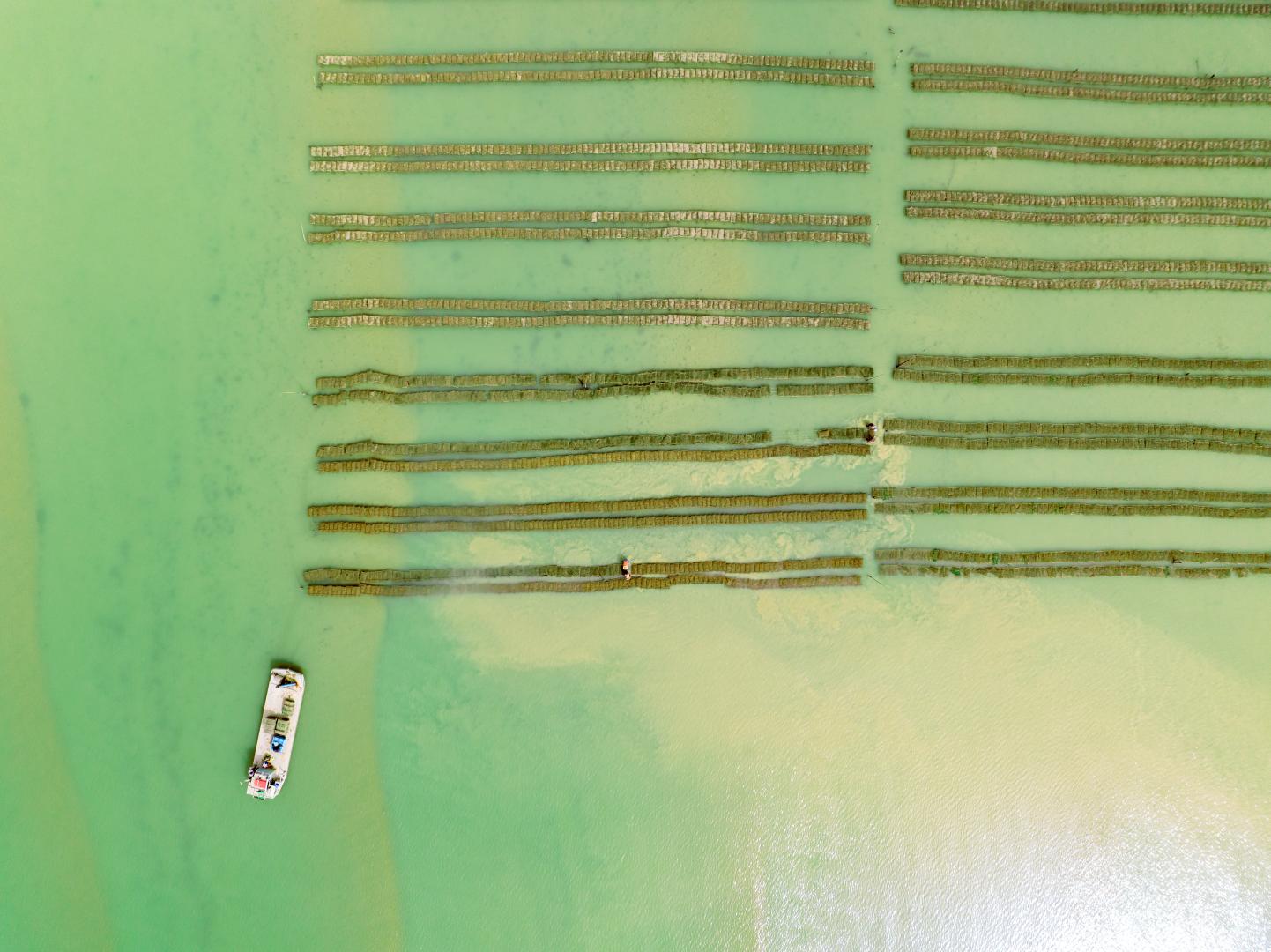
We can then move on to the second stage, detaching the oysters from each other. They can then be returned to the sea, placed in bags on tables. For almost two years, the oysters feed on plankton, and grow under the supervision of the oyster farmer. During this period, the bags must be handled almost forty times, depending on tides and currents. The oyster farmer has to watch over his beds every day. It's a tough job, but a very precise one.
Did you know that, with some 6,000 hectares of oyster beds and 3,000 hectares of oyster beds, Marennes-Oléron is Europe's leading oyster basin? Between 45 and 60,000 tonnes of Marennes-Oléron oysters are marketed and shipped here every year, representing 50% of French oyster production.
The final stage is unique to the Marennes Oléron basin: maturing in oyster beds. Claires are former salt marshes with clay soil, where fresh water mixes with sea water at each tide. Oysters mature in claires for one to six months. This is when the magic happens. As well as being immersed in a special environment, the oyster is also able to feed on a microscopic algae, the blue navicula. The yellow flesh of the oyster will then turn green on contact with the navicula, and take on that distinctive color, as well as that unique taste of the terroir, found only in one country, Marennes Oléron!
Oysters for every taste
Although Marennes Oléron oysters are either matured or raised in oyster beds, the choice is not as simple as that, as they are classified in different ways, depending on their size and the time they spend in the oyster beds. As far as size is concerned, it's very simple. Oysters are graded from 0 to 5. The 5s are the smallest, while the 0s are the largest. The 3s and 4s are the most common.
In addition to size, the quality of the oysters is also important:
- Fine de claires: these oysters must have spent at least 28 days in the claires, to give them their distinctive terroir taste. We recommend it for lovers of oysters with little meatiness.
- La spéciale de claires: Regular in shape, this oyster is slightly more voluminous in flesh. Maturing in claires gives it a more intense texture than the fine de claires.
- Fine de claires verte label rouge: This is a superior quality product. The criteria for obtaining this label are numerous, including having a nice round shell and a beautiful green color, synonymous with the passage to claires.
- Label Rouge oystersgrown in oyster beds: These are the top-of-the-range Marennes Oléron oysters. These oysters spend 4 to 8 months in claires, and are grown at a very low density, no more than 2 to 5 per m². This gives the oysters a high meat content and a pronounced local flavor.