




Marsh side
The Ile d'Oléron and the Marennes basin are home to one of France's most important wetlands, covering 40% of the territory of the Ile d'Oléron and 60% of that of the Marennes basin.70% of certain communes, notably Nieulle-sur-Seudre and Hiers-Brouage. Take advantage of the cycle paths and enjoy the wide variety of landscapes that only the marshes can offer.
A fragile balance
Shaped over the centuries by man, the marshes provided the precious salt needed to preserve foodstuffs, before being converted tooyster production andmaturing from the 18th century onwards. Today, the marshes are a genuine heritage, but also a fragile ecosystem. The wild, unspoilt nature of this area makes it a veritable paradise for migratory birds, including waterfowl such as geese and small waders. It's also a nesting site for passerines, which are very rare in Europe.
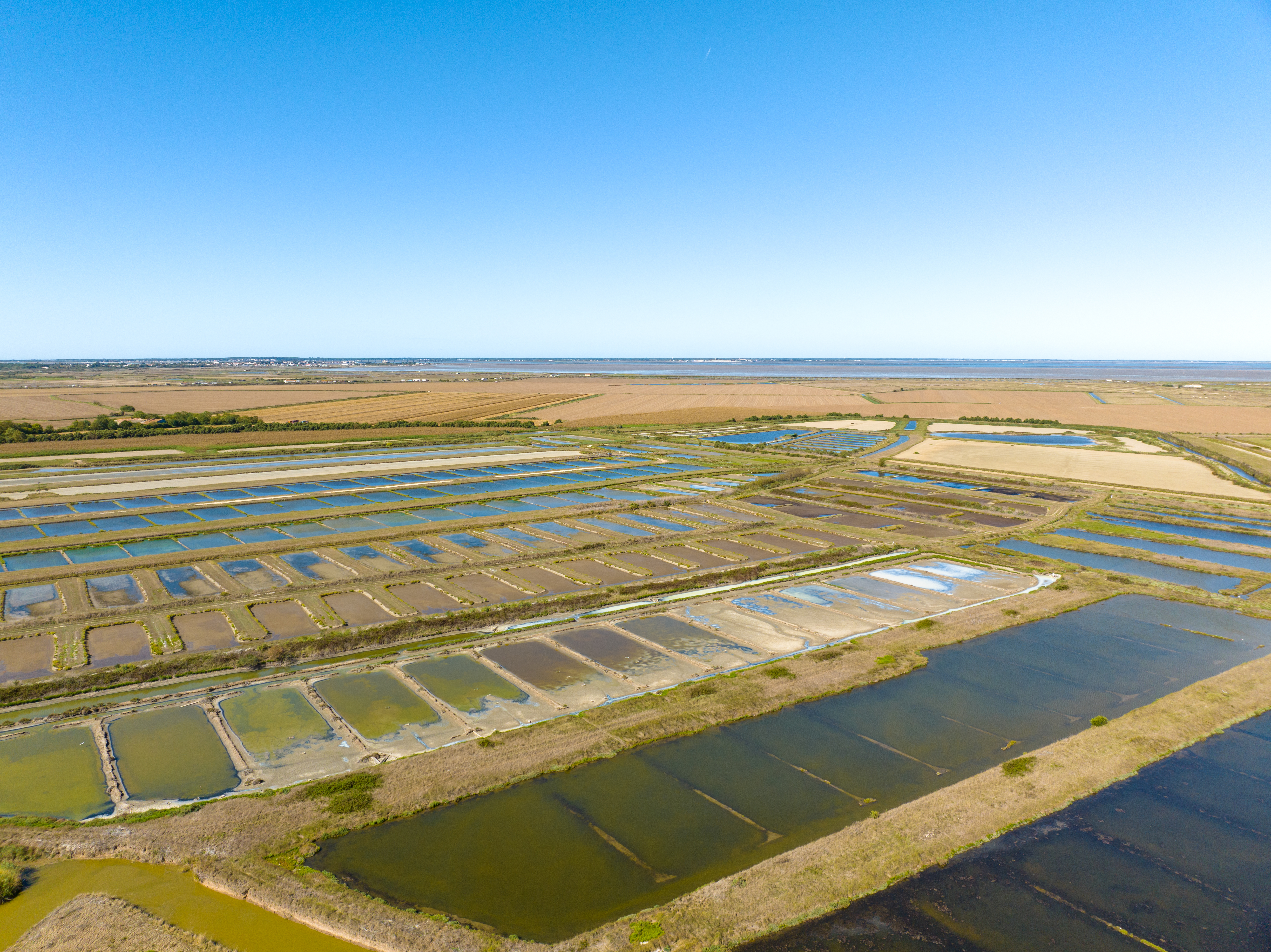
Today, most of the marshes on the Ile d'Oléron and in the Marennes basin, particularly around Brouage, are classified as Natura 2000 Protected Natural Areas. This natural heritage, which is part of the region's identity and reputation, also supports tourism and traditional activities (winegrowing, fishing, shellfish farming, salt production, etc.), and is the lifeblood of the local population. For example, marshes are areas where floodwaters expand. The degradation of these natural areas not only undermines the local identity, but also threatens the survival of the local economy and the quality of life offered by the Ile d'Oléron and the Marennes basin, hence the need to protect this natural heritage.
Shelter for flora and fauna
Comprising half land and half water, the marsh overlooks the ocean by just a few centimetres, and can be seen by walkers and boaters alike. To discover its riches, take a stroll along its small roads and meander between its clearings to discover all the complexity and richness of this territory in terms of both flora and fauna.
Among these marshes, why not visit the Marais des Bris, a 37-hectare protected natural site conquered by man from the sea in the 19th century and now owned by the Conseil Général de la Charente-Maritime. Protected for its biological wealth (birds and orchids), the site can be visited on its own or in the company of a nature guide. A footpath, sports trails and games for children make it a fun and educational family outing.
Did you know? Today, there are around 250 species of birds and over thirty different mammals. As for the flora, it's also very rich, with almost 140 different species present on the territory. These flowers are mainly found in the dunes and wetlands.
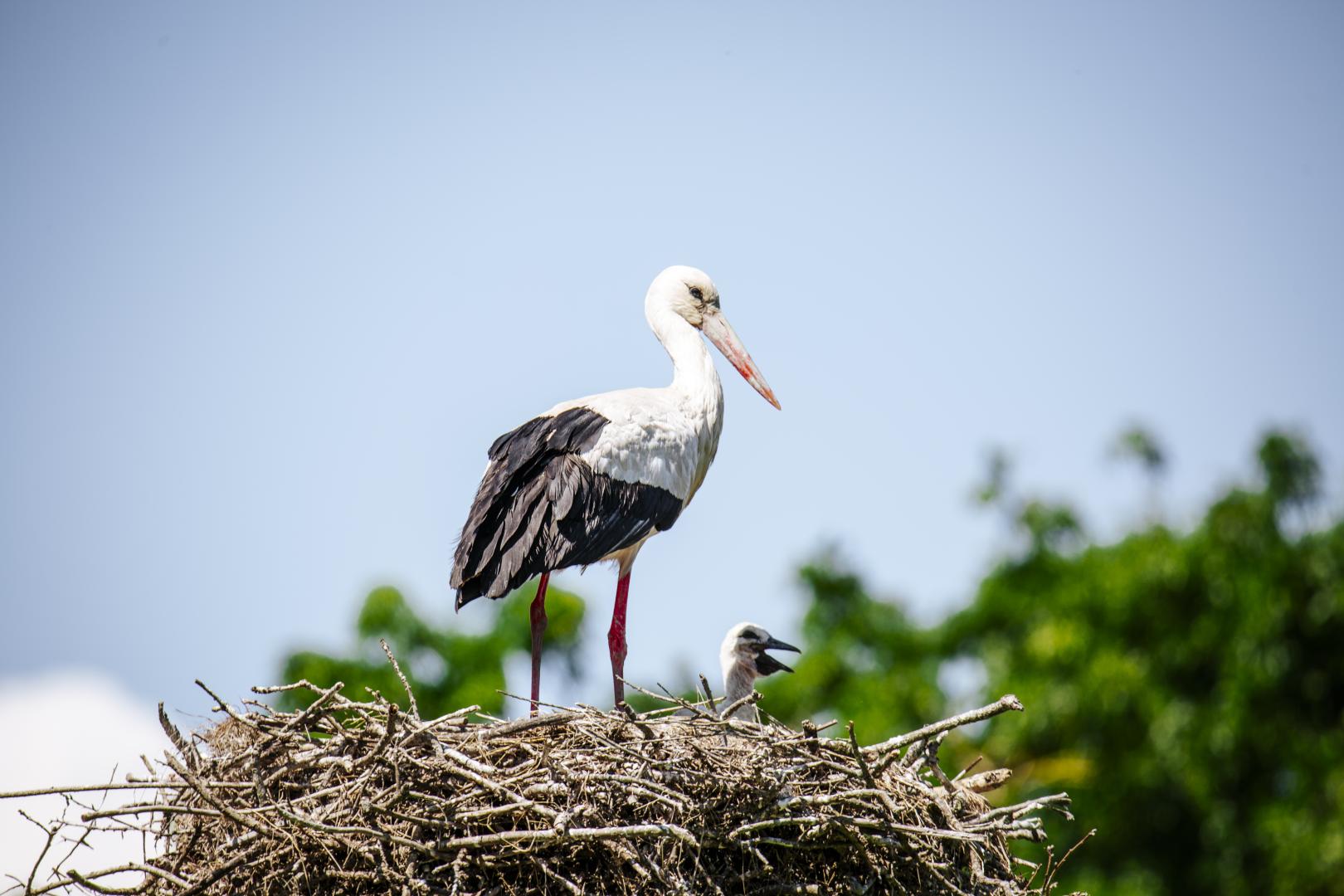
The Marennes basin is home to the Brouage marsh, an ideal place for the maintenance and development of numerous species, and a nesting area for over 150 species , including grey herons, purple herons and egrets. Since 1978, white storks have been nesting in this Stork Capital (thanks in particular to the help of the Groupe Ornithologique de Brouage), where they find abundant food.
The Seudre, Brouage and Ile d'Oléron marshes are natural areas that have been shaped for centuries by human activity. They are renowned for their exceptional diversity. Discover the marshes by kayak or paddle, and learn about the best practices to adopt when kayaking, canoeing or paddling in our marshes !