




Maritime heritage
Essentially turned towards the sea, Ile d'Oléron and the Marennes basin are distinguished by their rich heritage, particularly their maritime heritage, which is inextricably linked to the history of this territory. From the Chassiron lighthouse to the Moulin des Loges, take a look at what has contributed to our maritime history.
The Chassiron lighthouse
In service since 1836 to guide sailors entering the waters of the Pertuis d'Antioche, the 46-metre-high Chassiron lighthouse dominates the northern tip of the Ile d'Oléron. Striped like a convict, the Chassiron lighthouse houses a show trail, a real "living" circuit retracing the story of a young shipwrecked sailor, as well as a themed store. After climbing its 224 steps, you'll discover an exceptional panorama of the Ile d'Oléron, the Antioche beacon, La Rochelle, the islands of Ré and Aix and, of course, the ocean... Finish your visit with a visit to the lighthouse gardens, laid out in the shape of a compass rose. The lighthouse is open all year round.
Le Moulin des Loges
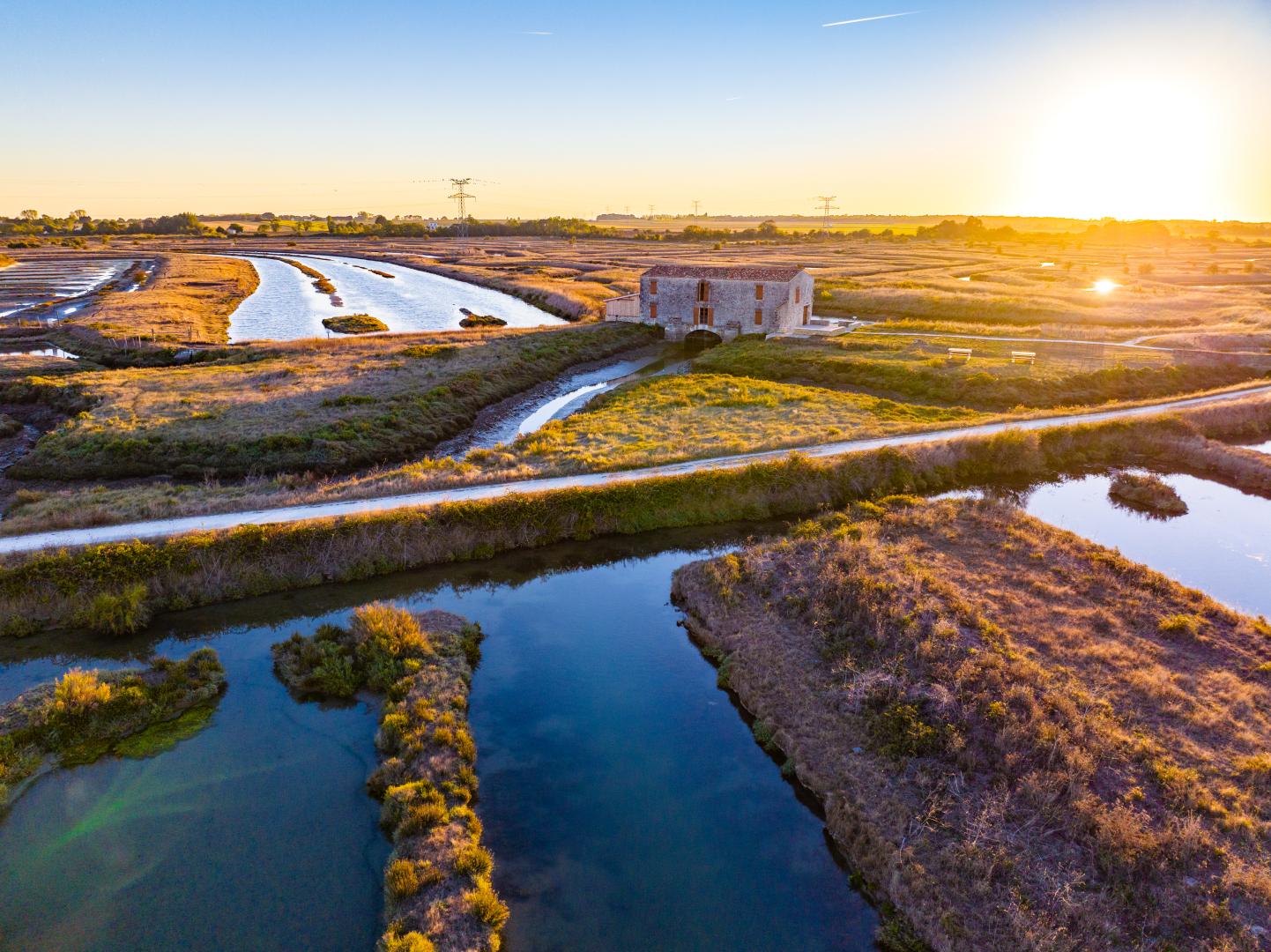
In Saint-Just-Luzac, in the heart of the Seudre marshes, stands one of Europe's last remaining tide mills, which battles wind and tide to produce flour: the Moulin des Loges.Abandoned, plundered and forgotten in the early 20th century, this heritage site was restored in the 2000s by the Conservatoire du Littoral and opened to visitors, with the aim of raising public awareness of the richness of the local heritage and the Seudre marshes. The result of an in-depth investigation into the past, the interior mechanism was rebuilt in 2006, just as it was in the Middle Ages. From an abandoned site, the Moulin des Loges became a tourist attraction, as well as a venue for exhibitions and events.
The Robert Léglise shipyard
TheChantier naval Robert Léglise - Patrimoine Maritime Oléronaisassociation was founded in 1995, and is perhaps the last remaining local example of wooden shipbuilding. Thanks to the association, the century-old shipyard in the port of Château d'Oléron has been saved and rehabilitated, and many of the island's traditional boats are beginning to enjoy a second life. The association is dedicated to the maintenance and repair of traditional Charentais boats, and it's a fascinating world, brought back to life by tools, photos, plans, templates and the ancestral skills of marine carpenters, that you can discover here. The shipyard is open all year round on Wednesday mornings from 9am to 12pm, and by appointment for groups of 10 or more.
The fish locks
Walking along the northern shores of Oleron, you may notice at low tide low stone walls jutting out into the sea in the shape of a horseshoe. These stone constructions are fish locks, or simply fixed fish traps. These stone constructions are fish locks or, more simply, fixed fish traps. On the shores of Oleron, wherever the coast was rocky and there were stones, there were locks. They are built from coastal stones stacked in such a way as to withstand the onslaught of the sea. These huge masses of stone are built without any connection and become fragile as soon as one of their stones is moved. Their main role is, of course, to catch fish , but they also act as breakwaters , mitigating marine erosion on cliffs and beaches. The system is simple: fish enter the lock at high tide and are trapped there at low tide, surprised by the rapid flow of water through the bouchot. All that's left for the fisherman to do is retrieve the trapped fish. Until the 19th century, there were some 240 locks in operation, compared with 17 today. The latter are maintained by volunteers and enthusiasts who work to keep this tradition alive. Please note: it is strictly forbidden to fish in these fish locks, or even to climb on them.